Retire a legacy content-heavy site and design a new one
Two sites, one thorny problem
What do you do when you have two audiences with different security clearances who are permitted to see different sets of content?
If granular, role-based permissions aren’t feasible, two sites may make sense.
But over time, this solution lead to inefficient rework, diverging stakeholder interests and a scattered content mess. Plus, new technical functionality became feasible.
We had to combine the two sites into one — both a design challenge and a stakeholder alignment one.
Create the “engagement arc,” set the stage
I had four months to work with and knew that by the end of the engagement, I had to deliver a new concept as well as stakeholder alignment on direction. I worked backwards to plot out the various activities and touchpoints.
When we kicked off, our stakeholder group understood the journey ahead and why we were undertaking the work.
Content and IA Audit
One of the master UX tools, a content audit helped me plot out the universe of what we were working with.
The two sites comprised thousands of market intelligence articles spanning decades, with different focuses for content in each site.
The articles were organized according to repeatable “products” and these were in turn grouped into higher level categories reflected in the two sites’ information architecture.
Understanding the two systems of organization helped pave the path to re-imagine how they could be organized into one cohesive system.
Survey and Interviews
While we had kicked off the engagement with a small number of stakeholders and understood many of their goals, a deeper dive with a broader set of readers and writers helped us identify other gaps and opportunities.
For example, we learned that while the content was in use in daily reporting activities, higher level goals for the site weren’t being achieved.
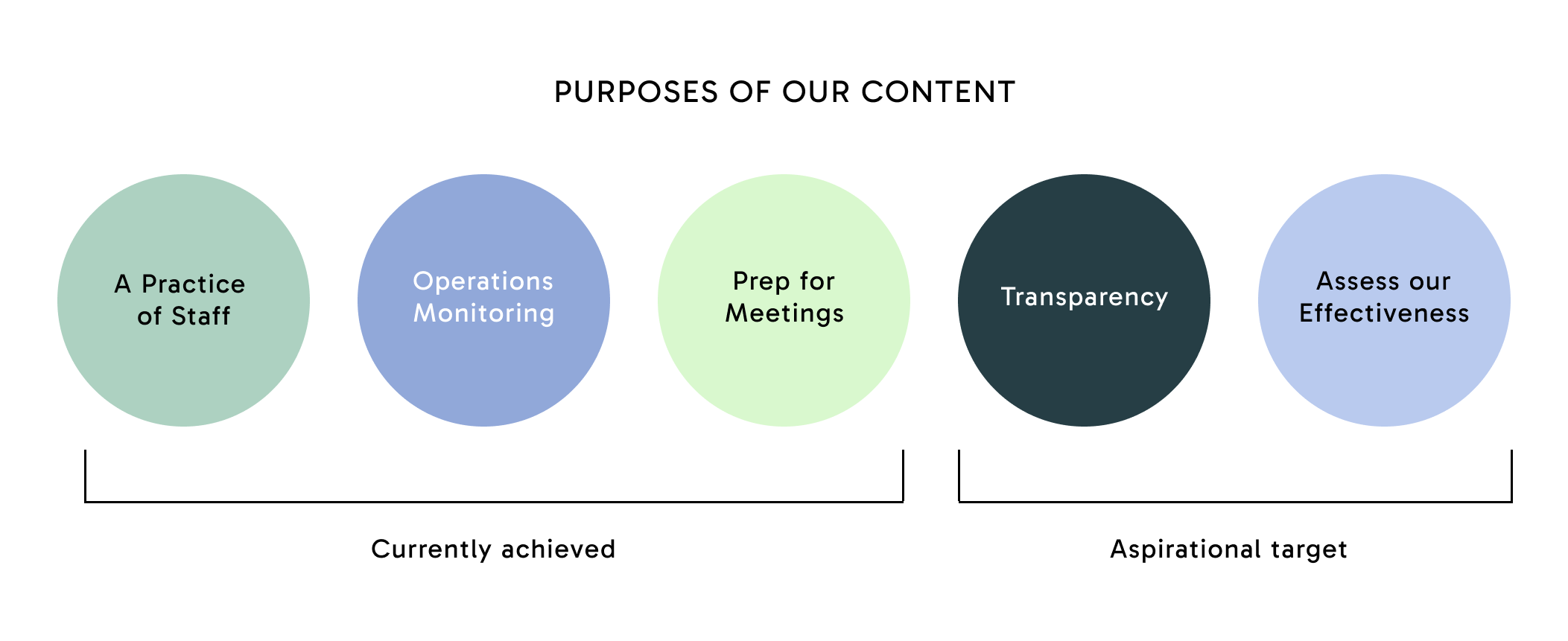
Stakeholder Whiteboarding Workshop
Using our findings, I developed an in-person workshop with the senior leaders who would have to find a way for their (currently) separate sites to coexist.
We had analog cutouts of both “personas” and “purposes,” and using these concepts and clear activities, we were able to envision a way forward for the (future) single site.
Starting apart from tactical questions helped ground the conversation in shared goals, building alignment.
Recommendations & Buy-In
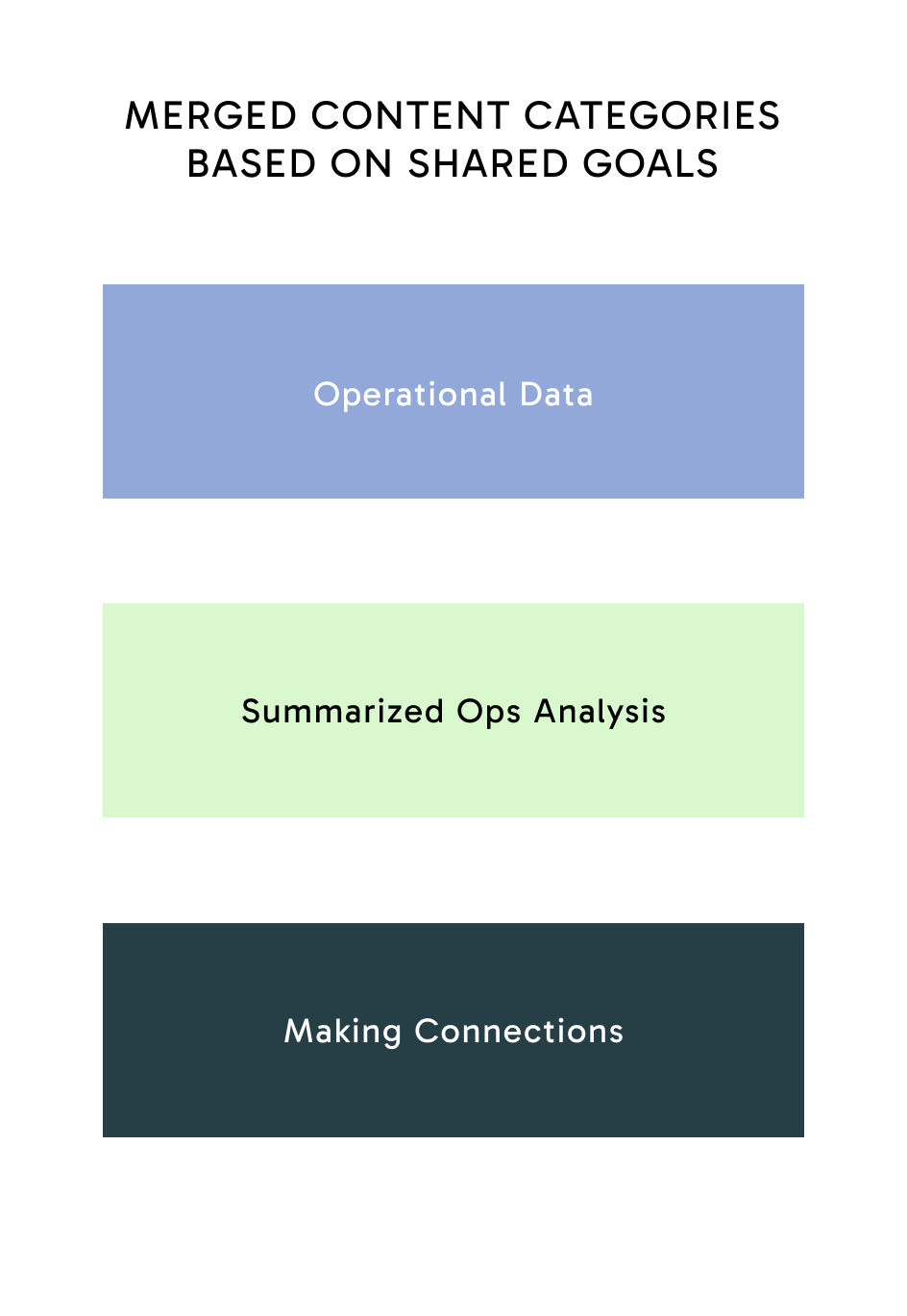
By the time we reached the recommendations stage, we had significant understanding built in from leadership.
One of the most important tenets of consulting — “never present only one option” — was adhered to.
However, the best direction to take was obvious given the groundwork already laid, and the sites were merged under a new information architecture.